26 September 2010

Finnish Power Electronics


It is sad to listen to the last albums of Pan Sonic in recent months as we mourn for the end of the excellent electronic duo after almost two decades of intensive electro-cuting of music listeners all over the world with their uniquely personalised brutalist but at times pointilistically minimal techno from 'Vakio' to 'Gravitoni'. Their two albums with Keiji Haino, released also on Blast FIrst Petite are brain-melting void to sink one's head in. As I listen to the two chaps frequently overpowered by Haino's guitar and vocal histrionics (there are few who dont...) in these tracks, I remember a scene, almost 10 years ago when my friends and I brought them down to this island republic of mine to perform at a dingy little club. We were just trying to break the ice when we chanced upon the topic of Keiji Haino and his infamous post-rock group (as in after-rock and not rock-rock if you know what I mean), Fushitsusha. They expressed much interest in him and they wanted to check him out more and thus a couple of years ago, they not only checked him out but played with him at a gig and in a studio too. They are fans of music and they themselves left a legacy behind for others to be fans of theirs, for a long time to come, I hope. As I have mentioned this elsewhere in this blogspace about their music's links to Noise, I just want to salute them for their groundbreaking nerve-raking music: music to scratch your brain cells to.

On the topic of Pan Sonic, who are from Finland, I just finished a book on the early history of Finnish electronic music by Petri Kuljuntausta called First Wave: A Microhistory of Early Finnish Electronic Music. Well researched and written, it traced the international development in post-World War II modern composition scene of new music, musique concrete and electro-acoustic music of the American (Cage, Varese), French (Schaeffer, Henry) and German (Stockhausen and the Darmstadt school) and their impact on Finnish composers, engineers and radio. It got me to pull out some of my early CD collections of early Finnish music on Love Records like Erkki Kurenniemi's 'Aanityksia/Recordings 1963-73' and compilations like 'More Arctic Hysteria/Son Of Arctic Hysteria: The Later Years Of Early Finnish Avant Garde' and 'Psychedelic Phinland: Finnish Hippie And Underground Music 1967-1974'. 5 CDs of primitive rock vibes, prog tunes, satirical rock poetry, electronic etudes and hoe-downs.


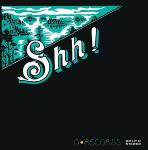
Then I also pulled out the recent vinyl reissue of infamous but legendary underground experimental out rock group, Sperm called 'Shh! Heinasirkat'. Check it out, as it contains some of the most consciousness tweaking atonal pre-rock atvaistic jam sessions ever; if you are into Amon Duul's Psychedelic Underground or Futura Records' stable of weird psych/concrete rock/out jazz. Finland did not start with Pan Sonic in its underground/experimental musical tradition: it continued with the formation of the duo and it is still, I hope moving and pushing music forward in the next decades to come.

19 September 2010

Shizuka Meets Les Rallizes!


+


Stop Press!

Shizuka played with Mizutani of Les Rallizes back in the 1990s! Check out the following website:
Shizuka Meets Les Rallizes

08 September 2010

The Hypnagogic Haze of Southern Hiphop


Listening to the "Chopped & Screwed" albums of Chamillionaire's The Sound Of Revenge and David Banner's Mississippi can be a joy in the tropical heat of where I come from: blasting the slowed-down, stretched and hypnotizing beats and acrobatics of the words by these rap acts while driving through the hot tarmac roads, windows wound down allowing the scorching breeze to cruise through the inside of the moving car while the music interacts with the surrounding sounds and traffic is simply hazy and groggy.


The origin of the "Chopped & Screwed" sounds came from a home-based DJ based in Houston before he passed in November 2000. Calling himself DJ Screw, his home-brew sonic alchemy and the subsequently released mixtapes (mix CDs too) became the next point of progression in the evolution of the creativity of Southern Hiphop in the 1990s. Allegedly influenced by syrup and the weed, the music of DJ Screw and the "Chopped & Screwed" albums can be considered as the manifestations of post-Cold War psycho-lysergia and bodily lethargy. Oozing with dreaded beat deconstructions, their musics are both a copped-out as well as an up-yours to the increasingly paranoid world of neo-liberalism championed by the Bush administration, the supposedly indestructible financial powerhouses (well at least that was the perception of the world and the companies before September 2008) and the hegemonic transnational corporations.

So is music today a form of copping out and myopic up-yours too? Hypnagogic Pop and its attendant musical allies in Hauntology are seemingly a-political; whereas the need for political activism is more pertinent than ever, is H-Pop merely just lull us into a state of resignation? Or perhaps providing us with a platform to really, tapping into the past and re-imagining a future which today seems so foreclosed and doomed?


By the way, a perfect soundtrack to mull over the above:
Dagger Swords - Dagger Paths (An excellent hip-hop inspired English underground sonic hypnosis) on an excellent record label, Olde English Singing Bee.

02 September 2010

Stop Press!: Online exhibition: No Wave


Online exhibition: No Wave

An excellent film treat to the nascent late 1970s/early 1980s New York No Wave scene featuring the Queen of Siam, Lydia Lunch, film maker Vivienne Dick, powerhouse post-hardcore growler, Henry Rollins, the legendary Beth & Scot B, key stalwart of the Cinema of Transgression, Nick Zedd and many more variously as the directors or actors in these three films. I hope you enjoy them, so just click on the link above.

01 September 2010

Sun Ra: Truly Hypnagogic


Have been digging out my Sun Ra albums and blasting them for days as I am absorbing the cosmic knowledge documented in John Sinclair's edited collections of interviews,reminiscences, musings and tributes of and on the man from Saturn. Years ago, I read the definitive biography on Ra by John F. Szwed, "Space Is The Place: The Lives And Times Of Sun Ra" and he has been a source of deep amazement and wonder. His music is neither past, present nor future but it can be all three at once, strangely. His big band pieces, fire music-like blasts, 1960s/1970s outer space keyboards adventures, disco tunes and groovy 1970s fuzak are all part of his repertoire. His albums inspired Merzbow to release literary hundreds of albums as Masami Akita, the man behind Merzbow, thought Sun Ra used to release thousands of albums(!).


But I want to focus on his indirect influence or rather similarities with today's underground scenes obsession with retro-futurism: Sun Ra is consistently re-visiting the past never lived and living through a present that is seldom static, while looking ahead into a future which is oddly deep with Black Astro-musicology. The theses put forward by Kodwo Eshun in his seminal text, "More Brilliant Than The Sun: Adventures In Sonic Fiction", published in the late 1990s, was one of the first to draw these hidden a-chronologies in the Black Sonic Arts of Sun Ra, Lee Scratch Perry, Miles Davis, Detroit Techno and beyond. Strictly non-linear but multi-versal in nature, the music, teachings and poetry of Ra is all of the above.

Hypnagogic before anyone else. Sun Ra's music is about looking back and re-imagining a better future for the Afro-Americans since the 1950s till the year he passed in 1993. His space-age visuals, costumes, album covers, chants, headgear, and lyrical themes are stuff beyond the shallow 1960s mainstream commercial white-boy psychedelia: he truly understood the history of the Blacks in the USA, the lost home of ancient Africa as well as the re-empowerment of Egyptology for his fellow black brethrens. And his music is both avant garde and pop: Hypnagogic pop.

Is There A Noise Continuum Part 15: Performing Noise, Noise Performs


This is another part from my Noise paper... focusing on the links between some of the performance art's aesthetics with the art of noise.

The connection between Noise and the world of performance art and sound art is an erratic one as some are clearly music precedents while others are more conceptual forebears: within the Fluxus and Fluxus related group of artists, Yoko Ono with John Lennon released albums which combined her experimental take on voice while pushing the form of rock to its limits and thus foretelling the coming of No Wave and Noise Rock; Yasunao Tone’s wounded CDs in the 1980s and 1990s are also creative re-thinks of abusing the format of the then new digital miracle music carrier, the CD, to make non-repetitive and unpredictable results in their noise/music production. Christian Marclay, who two generations later, made a name for himself with his use/abuse of the vinyl, and one can find Noise artists working in similar vein in the works of Industrial Records associate, Boy Rice/NON, and Japanese free jazz/improviser Otomo Yoshihide. All three of them explored, questioned and interpreted the medium in their own ways in their noise making.

Hermann Nitsch, the most established and recognized of all the Viennese Actionists today, was into Noise: his symphonies and his infamous Des Orgien Mysterien Theaters performances placed the cacophonous ‘musical’ accompaniments (Noise) in the foreground as one of the key elements of the re-enactment of the Dionysian rite. He and the other Actionists like Gunter Brus, Otto Muehl and Rudolf Schwarzkogler were pushing performance art using the body and rituals while highlighting certain atavistic and primordial symbols and signs in their various actions, which during the 1960s in Vienna and Europe attracted police interference, legal actions, smear campaigns from the press as well as applause and support from like-minded audiences and fellow travellers. Subsequent Noise artists are known to name-drop them or explain their Noise aesthetics and performative foundations based on the actions and words of this group of taboo breakers. Early Merzbow releases used words like ‘action’ as a form of acknowledgment to Masami Akita’s debt to them.

Other performance artists who were not so linked to Noise making and music became important influences on the later practitioners in their conceptual ideas and the execution of performances: Vito Acconci’s theory of the power field and his various performance pieces which aimed at interrogating the domains of public and private in the late 1960s and early 1970s were conceptual avant garde bullets which shattered the straitjacketed mindset of the public; Chris Burden’s Shoot Piece totally destroyed the middle class construct of life and art when he was injured when, during the performance, he was supposed to be grazed by a bullet fired by his collaborator from a distance but instead more than what was expected was blasted off his body.

Younger generations of performance artists traverse the invisible demarcation between art, music and life with ease after the 1960s and 1970s when the first generations of performance artists from both groups had successfully broken down the initial societal barriers: John Duncan’s Blind Date (he had sexual intercourse with a corpse, recorded and released the procedure and then he topped it off with a vasectomy) updated Acconci’s Seedbed (the artist situated himself below the exhibition space, out of sight of the visitors and masturbated according to his associational fantasy of the sounds and voices he heard through the floor board) and pushed it even further by wrapping it with ethical thorns to prick and question the audience about issues of moral standards and societal norms. Of course, he did not deny the fact that it was also a form of public psychoanalysis to interrogate his personal psyche and purge his demons in some of the works he enacted. Christof Migone, a Canadian artist though not as outwardly transgressive, also uses his body as ‘canvas’ for noise and sound making: from holding out his tongue as far as he could to the cracking and popping of the joints on the body. His art is more personal but never frivolous as he often throws open the assumptions of the body politics and its relation to modern-day existential struggle. Even the notorious Haters are performance artists par excellence, who revelled in the joyful and iconoclastic physical destruction of fetish objects to attempt to break down the modern human materialist consumerist thought processes as well as injecting a solid dose of vitriolic fun in their acts of smashing and drilling. The recordings these artists made, which interface the usually inviolable boundaries between previous non-contaminated fields, are precisely what Noise is all about - a transgression of conceptual, creative and even ethical spheres, and questioning issues which most take for granted.